
In the crowded world of dietary supplements, consumers often equate a high milligram count on the label with high impact on their health. However, bigger does not always mean better. As the nutraceutical industry evolves and consumers become more educated, a new understanding is emerging: an ingredient is only as good as what the body can actually utilize.
This new perspective brings us to the complex kinetics of absorption and bioavailability for many minerals and lipophilic bioactives which must overcome dissolution and solubility challenges before being absorbed in the small intestine.
After a nutrient is ingested, absorption measures how much of an ingredient exits your digestive tract and enters your bloodstream. Nutrients must survive degradation from gastric acid and dissolve into the body’s fluids for absorption through the stomach and small intestines. Once a vitamin or mineral permeates the gut wall, it must withstand metabolism in the liver (in most cases) and successfully travel through the bloodstream to reach the specific tissues or cells capable of using it, making the ingredient more bioavailable to the body.
The Bioavailability Barrier: Why “Natural” Doesn’t Always Mean “Absorbable”
Before looking at solutions, we must understand the scale of the problem. Many of the most sought-after bioactive ingredients in the wellness world face significant barriers to absorption and thus lower bioavailability.
For example CoQ10, a critical enzyme for heart health and cellular energy, has such a large molecular weight and poor solubility that typically only a fraction of what you swallow makes it into the bloodstream. Similarly, Curcumin, the active compound in turmeric, is celebrated for its anti-inflammatory properties but is considered highly hydrophobic (water-repelling) and rapidly metabolized and eliminated by the liver before it can reach the tissues that need it.
For these ingredients, even a highly concentrated capsule might result in only a small amount of active nutrients being utilized by the body. When bioactives face challenges such as poor solubility, degradation from the gastric system or filtration in the liver, their intended benefits are lost. This leads to the “expensive urine” phenomenon, where consumers pay for high-dose efficacy they never actually experience.
The Problem with “Isolated” Nutrients
For decades, nutraceutical formulas have relied on isolated vitamins and minerals to help consumers fulfill their nutrition goals. While these high doses may look impressive on a label, without optimization for absorption kinetics the body sometimes treats these nutrients as foreign substances and leads them into waste.
To build long-term consumer trust, brands must stop focusing on how much they put in the capsule and start focusing on how much the body gets out of it.
The Solution: A Food-Style Matrix for Better Uptake
The future of efficacy lies in nutrients that mimic nature. This is the science and philosophy behind GPM™ Fermented Nutrients.
Rather than forcing the body to process isolated chemicals, GPM™ (Glycoprotein Matrix) fermented nutrients are produced through a unique microbial double fermentation process. This technique envelops vitamins or minerals within a natural protein matrix.
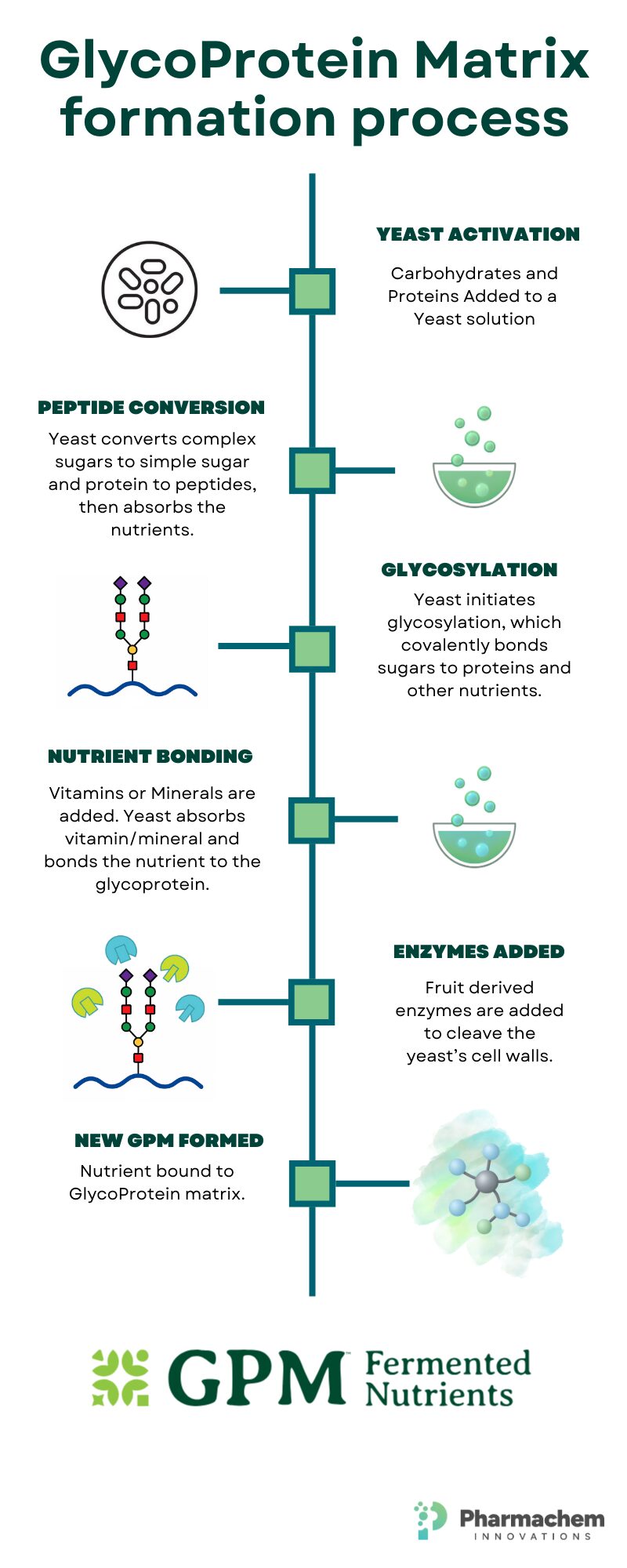
Because this matrix mimics the structure of food, the body recognizes the nutrient not as a synthetic isolate, but as a food complex. This “recognition” is the missing link in supplement performance, helping boost absorption of these nutrients while simultaneously reducing the amount of each ingredient needed to be effective.
Clinically-Studied Results for Improved Absorption
We can see this “food-matrix effect” clearly in recent absorption studies comparing GPM fermented nutrients to standard isolated forms:
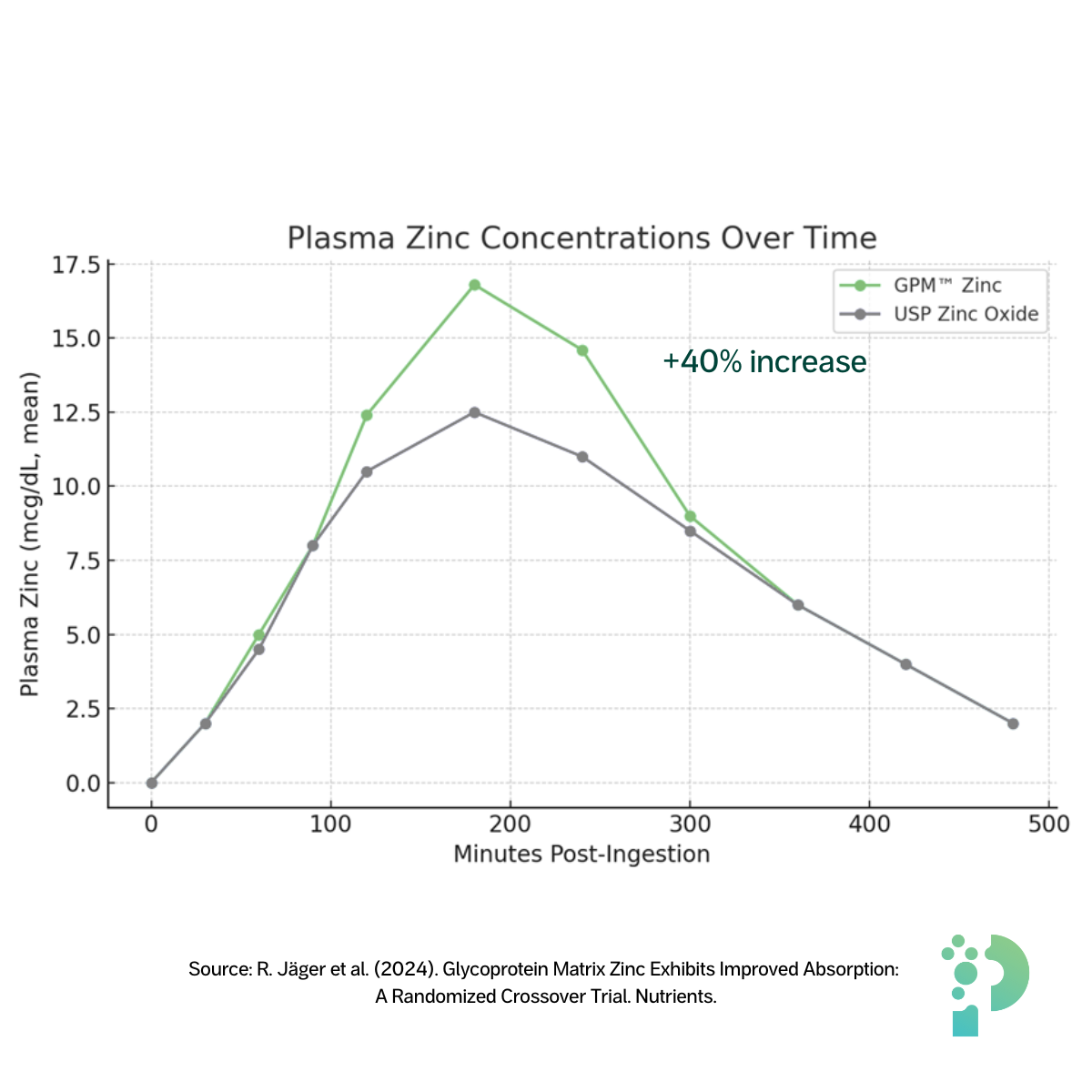
In a 2024 clinical trial comparing adults receiving a dose either GPM™ Fermented Zinc vs USP zinc oxide, plasma zinc concentrations measured significantly higher both in terms of maximum concentration (+10% cMax) and over time as measured +40% high in iAUC (incremental area under the curve).
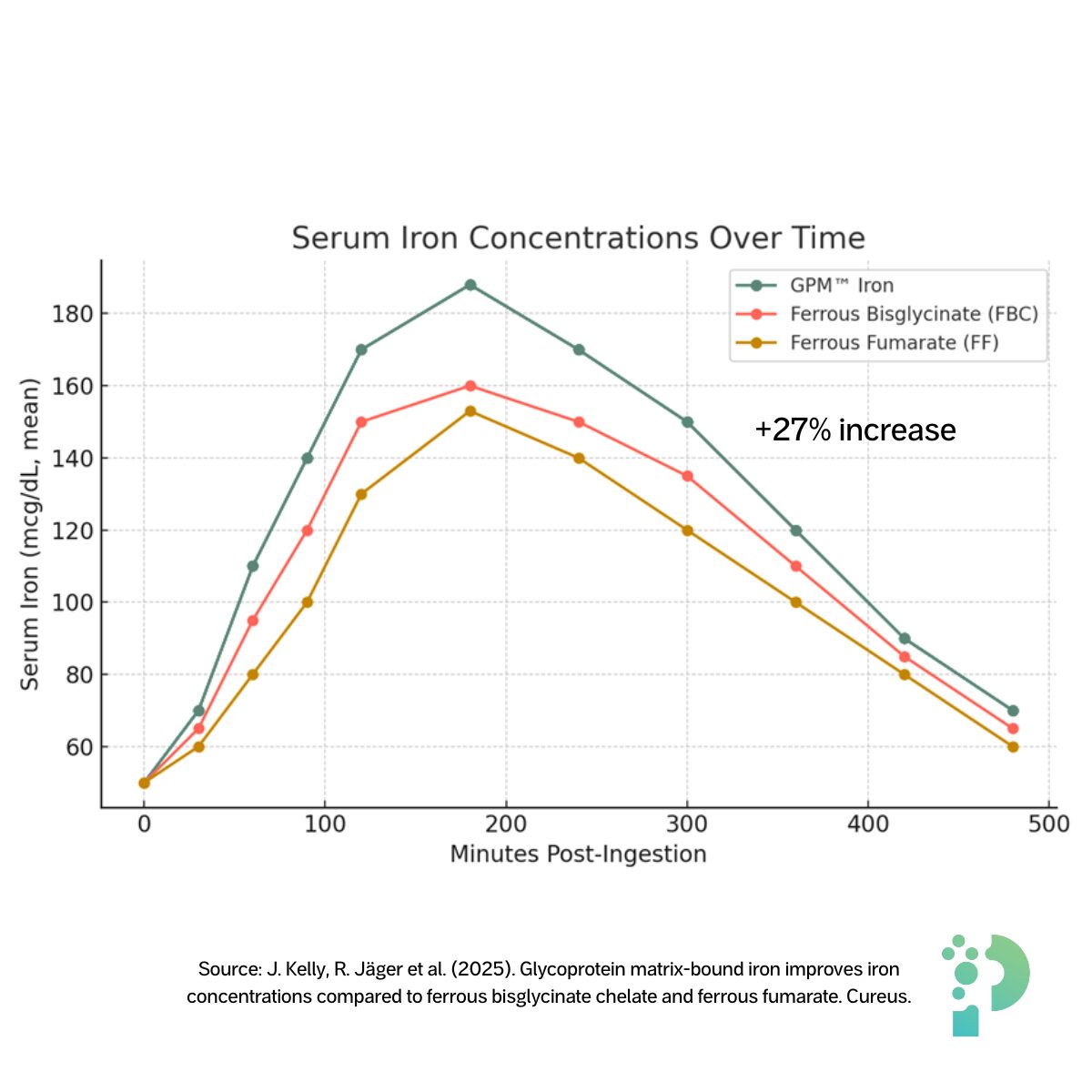
In a similar 2025 clinical study comparing 2 convention forms Iron (including chelated) with GPM Fermented Iron, patients had a faster Tmax (time to maximum concentration) and averaged +27 mcg/dL higher than shown iron salts (FBC & FF) the bloodstream.